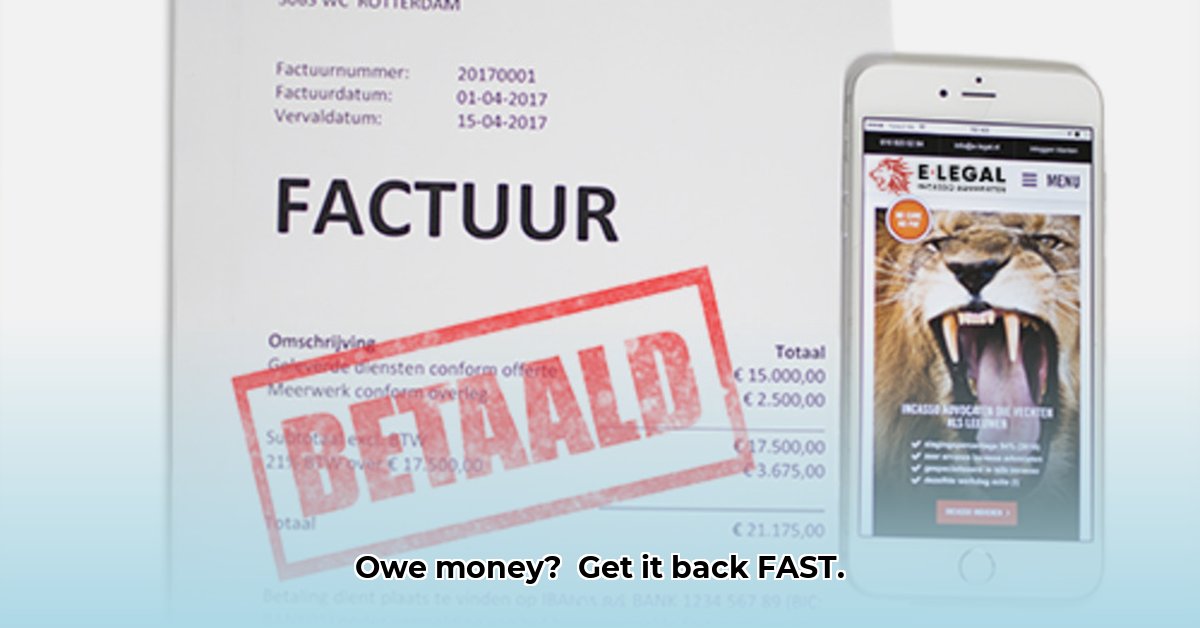
Understanding "No Cure, No Pay" Debt Collection in the Netherlands
Is your business struggling to recoup outstanding payments from clients? Debt recovery can be a major headache, consuming valuable time and resources. In the Netherlands, a growing number of businesses are turning to "No Cure, No Pay" (NCNP) debt collection agencies, like Incassobureau, offering a potentially less risky approach. This article explores NCNP, comparing it to traditional debt collection methods, and guiding you towards making the best choice for your business.
What is "No Cure, No Pay"?
"No Cure, No Pay" signifies a debt collection arrangement where the agency only receives payment if they successfully recover your outstanding debt. This differs from traditional methods where fees are charged regardless of outcome. For businesses, NCNP offers a clear advantage: reduced financial risk. You only pay for a successful recovery, typically a percentage commission of the recovered amount. This makes it a particularly attractive option for smaller businesses, or those facing tighter budget constraints, by mitigating upfront financial commitment. However, it's not without its limitations. The success rate will vary depending on the nature of the debt and the debtor's circumstances.
No Cure, No Pay vs. Traditional Debt Collection Agencies
Let's compare Incassobureau's NCNP model with traditional agencies like Invorderingsbedrijf. Traditional agencies usually charge upfront fees, or ongoing monthly fees, regardless of the outcome. This certainty comes at a price – you pay for their service whether or not the debt is recovered. Incassobureau, on the other hand, operates on a contingency basis: success means payment, failure means no charge. This transparency can aid budgeting and risk management. However, the success rate might differ. Traditional agencies, with their established processes, may have a higher success rate in complex debt situations, while NCNP agencies might be more effective in straightforward cases.
Weighing the Pros and Cons of "No Cure, No Pay"
Choosing the right approach requires careful consideration of your circumstances. Here’s a balanced view of the NCNP model:
| Advantages | Disadvantages |
|---|---|
| Lower upfront costs | No guaranteed recovery |
| Transparent pricing | Potential for longer collection times |
| Agency incentivized for success | Limited scope of action – may miss some opportunities |
| Reduced financial risk | May not suit all debt types |
Choosing the Right Agency: Key Questions to Ask Potential Agencies
Before partnering with any debt collection agency, ask these crucial questions:
- Success rate: What's your proven success rate with similar debts? (Provide specific data and case studies)
- Collection approach: Detail your strategy for debt recovery; what methods will you employ?
- Fee structure: Specify all fees, including any potential additional charges.
- Data protection: How do you ensure compliance with GDPR and other data privacy regulations? (Provide details of your compliance measures)
- Experience and reputation: What is your experience in this field, and what is your client feedback like? (Link to reviews)
A Hypothetical Case Study: How NCNP Works in Practice
Imagine a small business is owed R50,000. With a traditional agency, they would likely pay a substantial upfront fee with no guarantee of recovery. With Incassobureau's NCNP, they might pay 20% of the recovered debt – R10,000 in this instance if the full debt is recovered. If the agency fails to recover any money, the business incurs zero cost.
Legal and Ethical Considerations: Navigating the Dutch Framework
All debt collection in the Netherlands must adhere to the Wet Incasso (Debt Collection Act). Agencies are bound by strict regulations to ensure fair and ethical practices, safeguarding consumer rights. Both NCNP and traditional agencies must comply with these laws and GDPR regulations.
Conclusion: Making an Informed Decision
Choosing between a traditional debt collection agency and an NCNP model depends entirely on your unique circumstances. By carefully weighing the advantages and disadvantages, asking the right questions, and doing thorough research, you can make an informed choice that best suits your business needs and risk tolerance. Remember, prioritizing transparency and legal compliance is crucial in any debt recovery strategy.